Beyond the Game: How Streamers Are Inventing Entirely New Forms of Entertainment

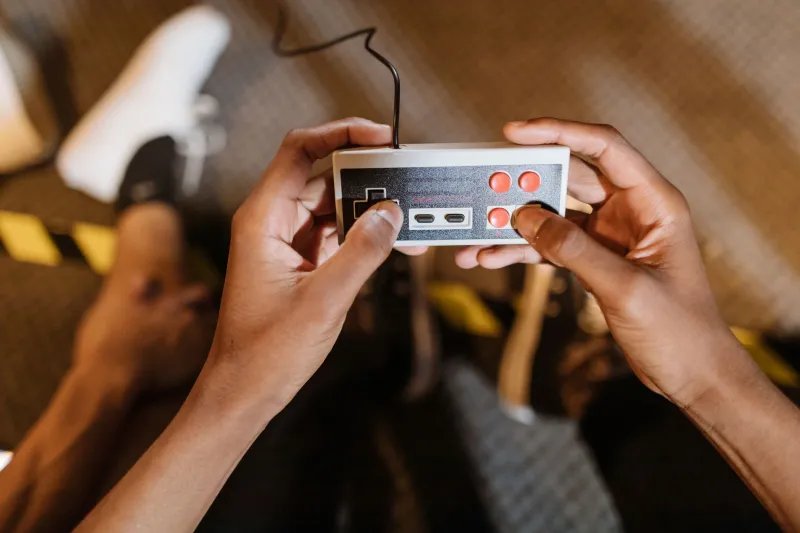
Photo by Photo by Amr Taha™ on Unsplash on Unsplash
Let's be honest: "watch someone else play video games" should not have worked as a mainstream entertainment concept. And yet here we are, in a world where individual streamers command audiences larger than most cable news networks, where a single Twitch event can pull more simultaneous viewers than a primetime TV broadcast, and where the definition of "content" has stretched so far it barely resembles what anyone imagined a decade ago.
But the really interesting story isn't the size of the audiences. It's what those audiences are actually watching.
Because somewhere between the early days of Let's Plays and today, a generation of creators stopped asking "what game should I stream?" and started asking a much more disruptive question: what kind of experience do I want to build?
The Speedrun Gets a Story
Speedrunning has been around almost as long as games themselves — players optimizing routes, exploiting glitches, shaving milliseconds off completion times. For years it was a niche pursuit, celebrated within tight-knit communities but largely invisible to mainstream audiences.
Then creators started doing something clever: they wrapped it in narrative.
Streamers like Smallant and others in the competitive Nintendo space didn't just broadcast their attempts — they turned them into episodic content, complete with setbacks, emotional peaks, and genuine dramatic tension. The run itself became almost secondary to the story of the run. Audiences weren't just watching technical execution; they were following a character on a journey with stakes they actually cared about.
This storytelling layer transformed speedrunning from a technical hobby into appointment viewing. Events like Games Done Quick — a charity speedrunning marathon that raises millions of dollars annually — now represent some of the most compelling live content on the internet. The format works not because of the games being played, but because of the human drama layered on top of them.
That realization — that the game is a stage, not the show — has quietly become the foundation for a whole new class of entertainment.
Collaborative World-Building as Live Theater
Some of the most ambitious content experiments happening right now look less like gaming streams and more like improvisational theater performed inside a video game engine.
Hermitcraft, the long-running Minecraft server populated by a rotating roster of prominent creators, is a fascinating example. On the surface, it's people building stuff in a block game. But zoom out and what you're actually watching is collaborative world-building at scale — a shared fictional universe with its own politics, economies, alliances, and running storylines that evolve in real time across dozens of individual channels.
Viewers don't just watch one creator; they follow multiple perspectives on the same evolving world, piecing together a larger narrative from fragmentary points of view. It's participatory storytelling in a format that has no real precedent in traditional media. You couldn't do this on television. You couldn't do it in film. It's native to the streaming ecosystem in a way that makes it genuinely new.
Similar dynamics play out in Twitch Rivals events, in massive Among Us social deduction streams, and in the sprawling Minecraft Championship tournaments where the competitive results matter far less than the relationships and storylines playing out between participants.
The Gamified Creative Contest
Another format that's quietly exploded is what you might call the gamified creative competition — events where the entertainment value comes not from gameplay skill but from creativity, collaboration, and community participation.
Mr. Beast's YouTube productions are the obvious reference point here, but the format runs much deeper than his specific brand. Across Twitch and YouTube, creators are running elaborate community challenges: build competitions judged by viewer vote, collaborative art projects where thousands of participants contribute individual pieces, live improv games where the audience writes the rules in real time via chat.
Channels like Jschlatt, Joel Haver, and a wave of smaller creators have experimented with formats that are essentially gameshows — except the host, the contestants, and the judges are all content creators, and the audience is simultaneously watching, voting, and participating in ways that traditional TV audiences never could.
What makes these formats sticky is interactivity. The audience isn't passive. They're not just watching something happen; they're shaping it. That sense of agency — even when your individual contribution is one vote among a million — creates a fundamentally different emotional relationship with the content.
The Tools Making It Possible
None of this would be happening without a wave of technology that's dramatically lowered the barrier to experimentation.
Twitch's channel points, polls, and prediction systems let creators build real-time audience participation mechanics without any technical expertise. StreamElements and similar platforms enable complex overlay systems that turn a stream into something closer to a produced broadcast. Discord has become the organizational backbone for community-driven events, allowing creators to coordinate hundreds or thousands of participants in real time.
On the production side, tools like OBS, Streamlabs, and increasingly accessible video editing software have made it possible for individual creators to produce content that would have required a full production team five years ago. A single person with a decent PC and a good internet connection can now run an event that looks and feels like a polished television format.
The result is an explosion of experimentation. When the cost of trying something new is low, creators try more things. Most of them don't work. But the ones that do? They spread fast.
What This Means for Entertainment's Future
Here's the uncomfortable question that traditional entertainment executives are slowly being forced to confront: if audiences are choosing interactive, creator-driven formats over passive consumption — and the data increasingly suggests they are — what does that mean for television, film, and the broader entertainment industry?
The honest answer is that nobody fully knows yet. But the direction of travel seems clear.
The formats being invented in streaming right now are native to the internet in ways that traditional media can't easily replicate. They depend on real-time audience participation, on the parasocial relationships between creators and their communities, on the ability to iterate and evolve based on immediate feedback. You can't take Hermitcraft and put it on Netflix. You can't turn a Games Done Quick marathon into a network broadcast. The magic is in the medium.
What you can do — and what savvy traditional media companies are starting to do — is learn from these formats. Incorporate interactivity. Build around community. Stop treating the audience as a passive consumer and start treating them as a participant.
The Creator Economy's Wildest Frontier
At PixelHive, we're genuinely excited about what's happening at the edges of streaming culture right now. The most interesting content isn't coming from studios with massive budgets — it's coming from individual creators and tight-knit communities who are making up the rules as they go.
The formats being invented today don't have names yet. They don't fit neatly into existing categories. And that's exactly what makes them worth paying attention to.
Gaming gave streamers a stage. What they're building on it is something else entirely — and we're all just lucky enough to have a front-row seat.