Collecting Games That Don't Exist: The Gen Z Fan Economy Built on Pure Imagination

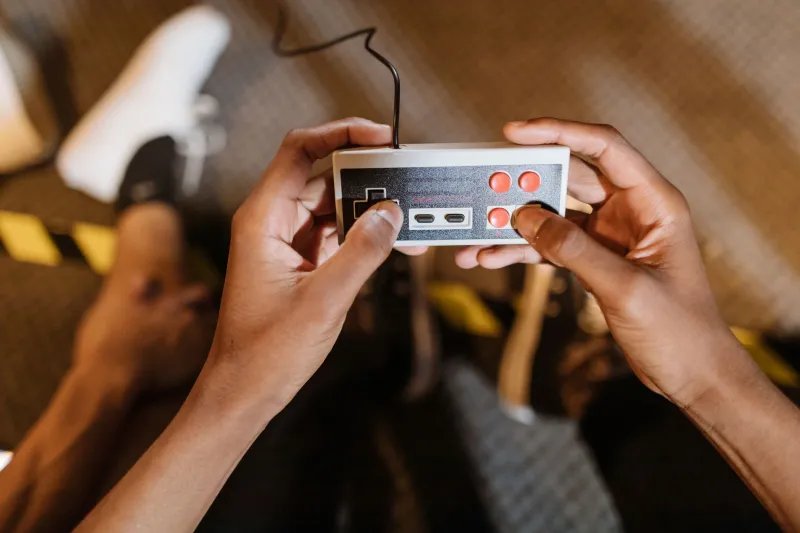
Photo by Photo by I'M ZION on Unsplash on Unsplash
Let me describe something that shouldn't make sense but absolutely does once you spend five minutes in the right corner of the internet.
Somewhere on a community art platform right now, someone is selling a hand-designed "legendary weapon skin" for a fantasy RPG that has never been greenlit, never been developed, and exists only as a pitch concept that leaked on Reddit six months ago. Someone else is buying it. And a third person is already working on a "sequel skin" for the follow-up game that also doesn't exist.
Welcome to speculative fandom. Pull up a chair.
The Art of Owning Something Imaginary
To understand why this is happening, you have to understand how Gen Z relates to gaming culture differently than the generations before them. For older millennials, owning a piece of gaming culture meant a physical cartridge, a collector's edition box, maybe a signed poster from a convention. The artifact was the thing.
For a lot of younger players, the artifact is almost beside the point. What matters is the story around the thing — the community context, the creative conversation it represents, the sense of being part of something before it becomes mainstream. And if the source material doesn't exist yet? That's not a dealbreaker. That might actually be the point.
Artists on platforms like Ko-fi, Gumroad, and even Etsy are producing detailed "concept art packs," fake in-game UI screenshots, and elaborate lore documents for cancelled or hypothetical games — and finding real audiences willing to pay for them. Some of these collections reference actual cancelled titles, like games that were quietly shelved after years of development. Others are entirely original worlds dressed up in the visual language of a game that never was.
Why Cancelled Games Hit Different
There's a specific emotional register that cancelled games occupy in gaming culture. Think about the grief that rippled through communities when Silent Hills was killed after that PT demo dropped, or the lingering sadness around Star Wars: 1313. These weren't just disappointments — they were bereavements. Players had already started imagining their experience with something that would never arrive.
That emotional investment doesn't just evaporate. It goes somewhere. And increasingly, it goes into fan creation.
When a game gets cancelled, the community that formed around its announcement doesn't dissolve — it often intensifies. Artists start filling the void. Writers produce fan fiction that expands on whatever scraps of lore were officially released. And yes, collectors start curating and trading the creative output of that community as if it were genuine memorabilia.
"It's preservation, honestly," says one digital artist who goes by Marcelline_Draws on social media and has built a following producing art for a cancelled open-world western RPG. "That game was real to a lot of people even though it never shipped. The art I make keeps that alive. And people want to own a piece of that."
NFTs Burned This Bridge — Can Anything Rebuild It?
It would be dishonest to talk about digital collecting without acknowledging the NFT era and the scorched earth it left behind. The early 2020s crypto-art boom promised a future where digital ownership would be meaningful and verifiable. What it delivered, for most people, was speculation, environmental controversy, and a lot of overpriced JPEGs.
Gen Z, as a whole, watched that unfold and came away deeply skeptical. But here's the interesting thing: the impulse behind it — the desire to own and trade digital creative work in a community context — didn't go away. It just found different expressions.
Platforms like itch.io, Patreon, and even direct Gumroad storefronts have become informal exchanges for this kind of speculative fan art. There's no blockchain involved. Ownership is more social than technical — it's about being the person in the Discord who has the full art pack, who can share the lore document, who supported the artist before they blew up. It's cultural capital as much as anything else.
Some creators are experimenting with limited-edition digital downloads — numbered PDFs, watermarked art files, time-limited releases — that create artificial scarcity without the baggage of crypto. It's clunky, but it's working.
Creative Expression or Trend-Chasing?
Here's where it gets genuinely complicated, and where reasonable people can disagree.
On one hand, there's something undeniably creative and community-driven about building a rich artistic ecosystem around a game concept. The best of this work is genuinely impressive — detailed world-building, cohesive visual design, elaborate lore that rivals what professional studios produce. It's fan creativity at its most ambitious.
On the other hand, some of this economy does feel like it's chasing the aesthetic of collecting without the substance. Paying fifteen dollars for a PDF of fake patch notes for a game that doesn't exist is... a choice. And the speculative element — buying early in hopes that a concept gains cultural traction and your "collection" becomes more valuable — mirrors the worst impulses of the NFT era, just without the blockchain receipts.
The honest answer is probably that both things are true simultaneously, depending on who you're looking at. The artist producing genuinely original work dressed in the visual grammar of a hypothetical game is doing something real. The person buying twenty copies of a digital collectible hoping to flip them if the concept goes viral is doing something else entirely.
What It Tells Us About Community
What fascinates us most about this trend, from a PixelHive perspective, isn't the collecting itself. It's what it reveals about how gaming communities have evolved.
These communities aren't waiting for official products to tell them what to care about. They're generating their own cultural objects, assigning them value, and building ecosystems around them — entirely independently of publishers and developers. It's creative autonomy at a scale that would've been hard to imagine fifteen years ago.
Whether that autonomy produces lasting cultural artifacts or just a lot of digital clutter probably depends on the specific communities doing it. But the impulse driving it — the refusal to be a passive consumer of gaming culture — feels like something worth paying attention to.
The games might not exist. The community absolutely does.