Watching From the Wings: The Quiet Gamers Who Belong Without Ever Speaking Up
Open up any gaming Discord right now. Scroll through the member list. You'll see hundreds, maybe thousands of usernames sitting there, green dots glowing, completely silent. No messages. No reactions. No clips posted. Just... present.
The knee-jerk reaction from community managers and content creators is to treat that silence like a problem. Low engagement. Dead weight. People who need to be coaxed out with giveaways or "introduce yourself" prompts. But what if that whole framing is completely backwards? What if the quietest members of your gaming community are actually some of its most loyal, most invested, and most essential?
Welcome to the world of the passive gamer — and yeah, it's a much bigger world than most people realize.
The Numbers Nobody Talks About
Here's a stat that tends to make community managers uncomfortable: across most online platforms, roughly 90% of users consume content without ever creating or contributing publicly. That's not a gaming-specific quirk — it's a consistent pattern that researchers have observed across forums, subreddits, comment sections, and social feeds for decades. In gaming communities specifically, the ratio can skew even harder toward observation.
Think about your own habits. How many gaming subreddits do you follow without ever posting? How many Twitch streams have you watched without typing a single message in chat? How many YouTube video essays about game lore have you binged at midnight without leaving so much as a thumbs-up? You're part of the silent majority, and you're in very good company.
The mistake communities make is measuring health exclusively through output — posts per day, comment threads, active users in voice chat. Those metrics matter, sure. But they're measuring the tip of the iceberg while ignoring the enormous frozen mass underneath.
What Lurking Actually Looks Like
Let's retire the word "lurker" for a second, because it carries this vaguely suspicious connotation — like someone crouching in the bushes. The reality is a lot more mundane and a lot more relatable.
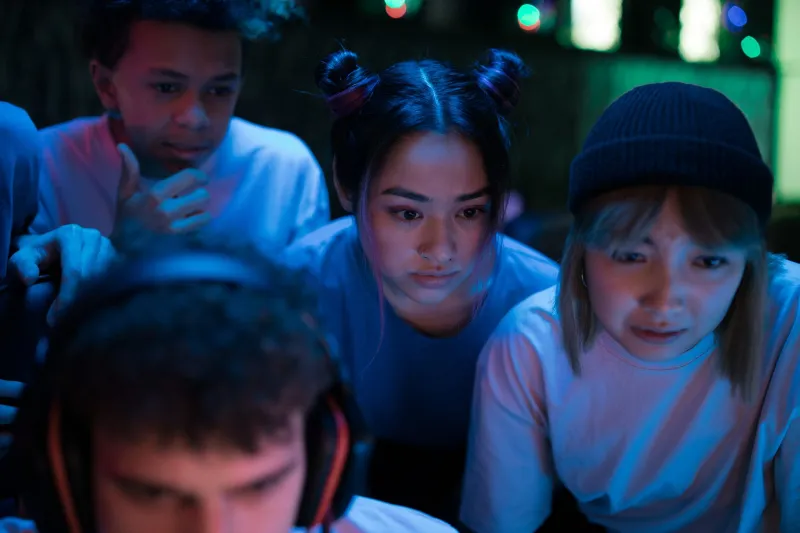
Passive community members are the people who read every post in a game's subreddit but never feel like they have anything original enough to add. They're the folks who watch a guild's public Discord unfold in real time, laughing at the jokes, feeling genuinely invested in the drama, but never quite finding the right moment to jump in. They're the players who follow a streamer for years, know their upload schedule by heart, and feel a real pang when that streamer goes on hiatus — even though they've never once said hello in chat.
That's not disengagement. That's a relationship. It just looks different from the outside.
The Anxiety Nobody Wants to Admit
For a huge chunk of passive community members, the silence isn't indifference — it's anxiety. Gaming spaces, for all their warmth and creativity, can feel brutally intimidating to newcomers or introverts. Post the wrong opinion about a game's mechanics and you might get ratio'd into oblivion. Ask a question that's been answered a thousand times and someone will absolutely let you know. Clip a mediocre play and, well, good luck.
The social stakes of public participation in gaming communities are genuinely high, especially in competitive or heavily opinionated fandoms. When you're new, or when you're not confident in your knowledge, or when you've just had a rough experience in another online space, watching from a distance isn't laziness — it's self-preservation.
And honestly? Communities should take that seriously. If the barrier to participation feels that steep, that says something important about the culture, not the people choosing to stay quiet.
Observation Is Its Own Kind of Investment
Here's what passive members bring to a community that doesn't show up in any engagement dashboard: consistency, context, and cultural memory.
The person who has read every major thread in a gaming forum for two years knows the history of that community better than someone who posted twice last week. They remember the drama, the inside jokes, the moments of genuine connection. They've absorbed the culture. When they eventually do speak up — and many eventually do — they tend to come in with a level of understanding that long-time active members immediately recognize and respect.
Passive members also vote with their attention in ways that shape communities without anyone noticing. The posts that get the most views, even without comments, signal to creators and moderators what's actually resonating. Silent readers still share links to friends, still bring new people into the community, still keep Discord servers and subreddits alive just by being there.
You can't see them doing it. But they are.
When Silence Becomes Participation
There's a beautiful irony in the way passive community members often describe their relationship to gaming spaces when asked directly. They'll say things like "I feel like I know these people" about streamers they've never spoken to. Or "that community got me through a really hard time" about a Discord they've never typed a word in.
That's not delusion. That's parasocial connection doing exactly what it's designed to do — creating a sense of belonging through shared experience, even when that experience is asymmetrical. And in gaming communities, where the content is often ongoing, evolving, and deeply personal, those connections can be surprisingly durable.
Some passive members eventually find their moment. A question nobody else is asking. A post they feel uniquely qualified to respond to. A new game that brings them out of their shell because suddenly they're the one with experience to share. The transition from observer to participant, when it happens, tends to be quiet and organic — not forced by a community challenge or a "we want to hear from you!" pinned post.
What Communities Owe Their Silent Members
If gaming communities want to genuinely serve their silent majority — rather than just performing inclusion — a few things need to shift.
First, stop treating engagement metrics as the only measure of community health. A community with 10,000 members where 500 post regularly and 9,500 read everything is a thriving community. The 9,500 matter.
Second, design spaces that are comfortable to inhabit without requiring participation. Not every channel needs a prompt. Not every event needs a sign-up. Sometimes people just want to exist in a space that feels good without being put on the spot.
Third, and maybe most importantly, trust that belonging looks different for different people. For some folks, community is a mosh pit. For others, it's a warm room they can sit in quietly. Both are real. Both count.
The Hive Has More Members Than You Think
The loudest voices in any gaming community are the ones that shape its reputation. But the quietest ones are often the ones that keep it alive. They're reading, watching, absorbing, and caring — just on their own terms, at their own pace, without needing anyone to hand them a microphone.
Next time you're tempted to call a community dead because the post count is low, or assume someone isn't a real fan because they've never commented — pause. The silent majority is out there. They're invested. They belong.
They just don't feel like telling you about it right now.