Fast Friends: Why Gaming Communities Turn Strangers Into Ride-or-Dies in Record Time
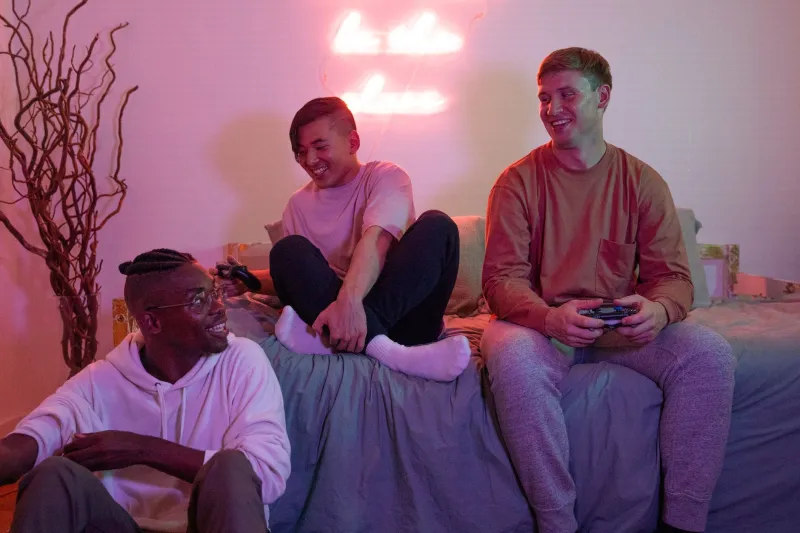
Think about your closest friend outside of gaming. How long did it take before you actually trusted them? Before you'd call them at 2 a.m. with something real? For most people, that kind of depth takes years — shared history, accumulated moments, a slow build of mutual vulnerability. Now think about the people you game with. Chances are, at least one of them got there faster. Way faster.
That's not an accident. There's something structurally different about how gaming communities manufacture closeness, and once you see it, you can't unsee it.
The Pressure Cooker Effect
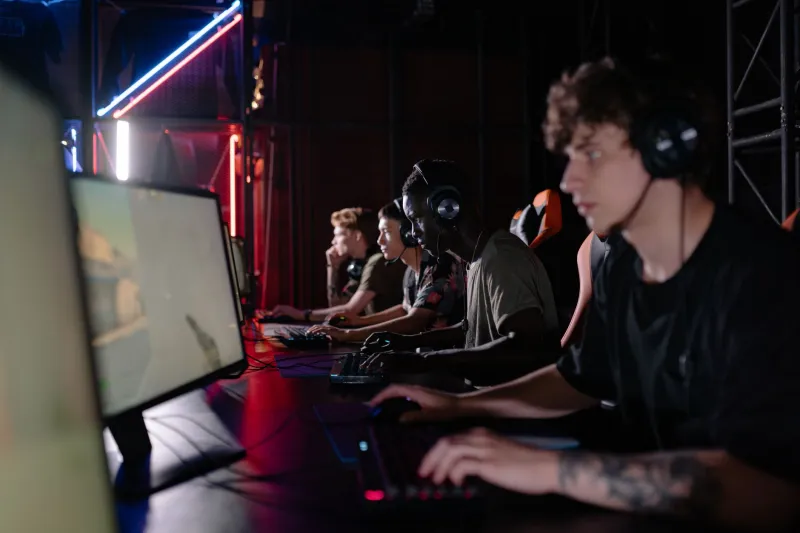
Gaming — especially multiplayer, team-based, or community-driven gaming — puts people into situations that compress emotional experience at a wild rate. You're not just hanging out. You're failing together, celebrating together, solving problems under time pressure, and navigating genuine conflict, all within the span of a single session.
Psychologists have a concept called "self-disclosure reciprocity" — basically, when one person shares something vulnerable, the other person tends to match it. In traditional friendships, this happens slowly, in carefully rationed doses. In gaming, it happens constantly and almost involuntarily. You rage-quit and someone sees it. You carry the team and someone notices. You make a dumb call and have to own it in real time. The mask slips fast.
Marco, a 26-year-old from Chicago who's been raiding in Final Fantasy XIV for three years, put it plainly: "I've told my FC [Free Company, the game's guild system] things I haven't told my college roommates. I don't fully know why. It just kind of happens when you're spending four hours a week trying not to wipe on a boss together."
Shared Stakes, Shared Identity
One of the biggest accelerators of bonding in gaming communities is the presence of genuine shared stakes. When your raid group is two percent away from a world-first clear, or your ranked team is grinding toward a promotion series, or your server's big collaborative project is on the line — everyone's emotionally invested in the same outcome at the same time.
This is rare in normal adult life. Most friendships are parallel rather than interdependent. You cheer each other on from the sidelines, but you're not usually failing or succeeding together in real time. Gaming changes that equation completely.
That shared investment creates a sense of "we" that usually takes years to build in conventional relationships. Developmental psychologists call it "identity fusion" — the degree to which your personal identity overlaps with a group identity. Gaming communities can trigger this surprisingly quickly, especially in games with strong social infrastructure like guilds, crews, or persistent servers.
Jasmine, a 31-year-old from Atlanta who started playing Destiny 2 during the pandemic, describes it this way: "By the end of our first month as a fireteam, I knew who needed to be hyped up before a hard encounter, who went quiet when they were frustrated, who needed space and who needed to joke around. I knew all of that before I knew most of their last names."
The Language You Build Together
Another underrated piece of the puzzle is the private vocabulary that gaming communities develop almost immediately. Inside jokes, shorthand, call-outs, memes that only make sense to people who were there for a specific wipe or clutch play — this shared language is social glue.
Linguists who study in-group communication note that shared language isn't just a byproduct of closeness. It actively reinforces and deepens it. Every time you reference something only your crew understands, you're re-affirming membership. You're saying, implicitly: you were there, I was there, this happened to us.
In gaming communities, this vocabulary can develop within days. And because games generate so many memorable, emotionally charged moments in such a short window, the shared reference library stacks up fast.
The Fragility Nobody Talks About
Here's the part that gets complicated: relationships built fast can also fracture fast. The same intensity that creates rapid closeness also means there's less scaffolding holding things together when something goes wrong.
Traditional friendships survive a lot of friction because they're built on years of accumulated goodwill. Gaming friendships — especially newer ones — sometimes aren't. A drama in the Discord, a disagreement about guild direction, someone leaving for a different game or a different crew, can unravel what felt like a profound connection in a matter of weeks.
This doesn't make those connections less real. But it does mean they require active maintenance in ways that people don't always anticipate. Marco learned this the hard way when a core member of his raid group quit over a loot dispute. "It felt like a breakup. Which sounds dramatic, but that's genuinely what it felt like. We'd built something real together and then it was just... gone."
The emotional stakes of these accelerated bonds are high. And the gaming community doesn't always have great tools for processing that kind of loss.
Why It Works (When It Works)
For all the fragility, the magic is undeniable. Gaming communities have become one of the primary places where adults in the US — especially men, who statistically struggle most with building new friendships after their mid-twenties — actually form meaningful social connections.
The structure of games does a lot of the work that social anxiety usually prevents. You have a shared purpose. You have a reason to be in the same space. You have a role to play. The awkward "getting to know you" phase is replaced by just doing something together, which turns out to be a much more effective bonding mechanism for a lot of people.
Jasmine puts it better than any study could: "Gaming gave me a reason to show up consistently with the same people. And consistency is like, actually the whole secret to friendship. I just never had a structure for it before."
What This Means for the Hive
For a community like PixelHive, where the whole point is that your community, your game, and your world are all intertwined, this stuff matters. The connections you build here — in comment sections, in community Discord channels, in co-op sessions and shared playthroughs — are real. They follow the same accelerated logic.
The people you meet through a shared obsession with a game aren't just usernames. They're going through the same emotional compression you are. They're seeing the unfiltered version of you that shows up when the stakes are high and the session is long.
That's worth taking seriously. Not just as a cool psychological quirk, but as something to tend carefully — because fast-grown things need a little extra care to last.
So yeah. Your gaming crew might know you better than your coworkers, your extended family, maybe even some of your oldest friends. And honestly? That tracks.