One Offhand Comment, A Million Downloads: How Streamers Accidentally Reshape Gaming Culture
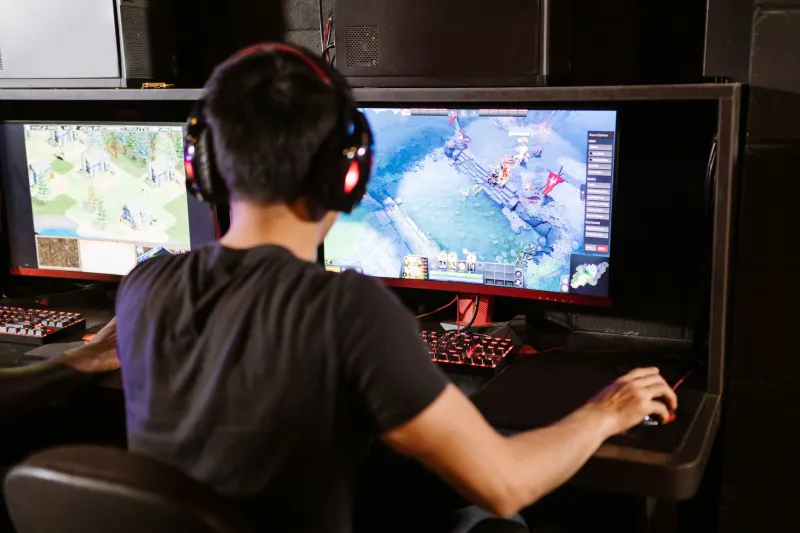
It doesn't take a sponsored segment. It doesn't take a dedicated video or a carefully crafted review. Sometimes all it takes is a streamer glancing at their second monitor, muttering "wait, what is that game?" — and the entire trajectory of a small studio's existence changes overnight.
Welcome to the streamer effect. It's messy, it's unpredictable, and it's one of the most powerful cultural forces operating inside gaming right now.
The Accidental Launch Pad
Let's be honest about how this usually goes down. A big streamer — someone pulling 30,000 concurrent viewers on a slow Tuesday — gets bored between sessions. They pull up something random. Maybe a friend sent them a link, maybe it showed up in a clip, maybe they literally just saw a thumbnail that looked interesting. They spend fifteen minutes with it, laugh a couple times, say something like "yo this is actually kind of fire" — and then move on.
Their audience doesn't move on.
Within hours, that game is trending on social. Clips get cut, reposted, quote-tweeted. The game's subreddit — which had maybe 800 members yesterday — starts doubling every few hours. Steam reviews flood in. The developer wakes up the next morning to an inbox they are absolutely not prepared for.
This happened with Among Us in a way that's practically textbook now. The game launched in 2018 to near silence. Then a cluster of big streamers picked it up during the pandemic summer of 2020, mostly because they needed something they could play with friends remotely. Nobody planned a campaign. There was no coordinated push. It was organic, chaotic, and completely overwhelming — the game went from a few hundred concurrent players to over 400,000 in a matter of weeks. InnerSloth, the tiny three-person dev team, had actually been planning to abandon the game and work on a sequel. The streamer wave forced them to completely rethink everything.
When Hype Goes the Other Direction
Here's the part people don't talk about as much: the streamer effect cuts both ways.
A big creator dunking on a game — even casually, even just with a dismissive laugh — can crater a title's momentum before it ever builds. One streamer with real audience pull saying "I don't know, this feels kind of mid" during a first impression can seed doubt across hundreds of thousands of viewers who haven't even played it yet. Those viewers go into comment sections. They repeat the take. The algorithm picks it up. Suddenly a game that might've found its audience with a little more time gets labeled a flop before the first patch drops.
Smaller studios are particularly vulnerable here. They don't have the marketing budgets to fight a narrative. If the early streamer coverage is lukewarm or negative, there's often no recovery — not because the game is actually bad, but because the cultural moment passed before the audience gave it a real chance.
The Parasocial Engine Underneath All of This
So why does one person's opinion carry this much weight? The answer lives in parasocial dynamics, and it's worth sitting with for a second.
Regular viewers of a streamer don't just watch — they know that person. Or at least, they feel like they do. They've spent hundreds of hours with them. They know their humor, their preferences, their tolerances. When that creator reacts to something authentically — not in a sponsored, scripted way, but just as themselves — it lands differently than a review. It feels like a recommendation from someone you trust.
That trust is the engine. And it scales in ways that traditional media never could. A magazine review reaches its readership. A streamer's genuine reaction reaches their community and gets clipped, shared, and re-experienced by people who weren't even in the original stream. The moment gets decoupled from its context and lives on as a signal — this person I trust thought this was cool — that ripples outward almost indefinitely.
Genre Shifts Happen This Way Too
It's not just individual games. Streamers have quietly reshaped which genres are considered mainstream.
Battle royale's explosion wasn't just about the games themselves — it was about how watchable they were. Streamers drove that conversation. Survival crafting games had a similar arc. Roguelikes went from niche enthusiast territory to a dominant genre partly because of how well they streamed — the runs are short, the moments are dramatic, the audience can follow along without needing context. When streamers gravitated toward them, audiences followed, and suddenly every major publisher wanted a roguelike in their portfolio.
Cozy games are going through something similar right now. What started as a quieter corner of the indie world has become a genuine mainstream category, partly because a wave of streamers — many of them newer to the space, or streaming as a secondary creative outlet — found that chill farming and life-sim content performed really well with their audiences. The genre didn't just grow. It got legitimized in the broader gaming conversation because the right people were visibly enjoying it.
The Developers Who've Learned to Read the Room
Some studios are paying attention. Not in a cynical, manufactured way — but in the sense that they're building games with streamability in mind. Clear moment-to-moment hooks. Reactions that read on camera. Mechanics that create natural drama without requiring the audience to understand fifty hours of lore.
This isn't selling out. It's adaptation. The streaming ecosystem is a real distribution channel now, arguably the most powerful one for indie games, and designing with it in mind is just smart product thinking.
What gets tricky is when that calculation starts overriding creative instincts — when a dev makes a choice because it'll clip well rather than because it serves the game. That's a harder line to walk, and not everyone gets it right.
What This Means for the Rest of Us
If you're part of a gaming community — and if you're here on PixelHive, you almost certainly are — you've probably lived through at least one streamer wave. Maybe you were ahead of it, watching a game blow up that you'd already been playing for months. Maybe you got swept up in it, downloading something at 1am because three different clips hit your feed in the same hour.
Neither experience is wrong. That's just how culture moves now.
The streamer effect isn't going anywhere. If anything, it's getting more complex as the creator ecosystem fragments — more mid-tier streamers, more niche audiences, more targeted waves hitting specific communities instead of the whole internet at once. The monolithic viral moment is giving way to dozens of smaller, more targeted ones.
Which honestly might be healthier. A game finding its exact audience through a creator who genuinely loves it — rather than blowing up to an audience that wasn't ready for it — is a better outcome for everyone. The developers get sustainable attention. The streamers get authentic content. The community gets to grow around something real.
And somewhere, a dev is refreshing their analytics page right now, watching a number they don't recognize climb, trying to figure out which clip just changed their life.